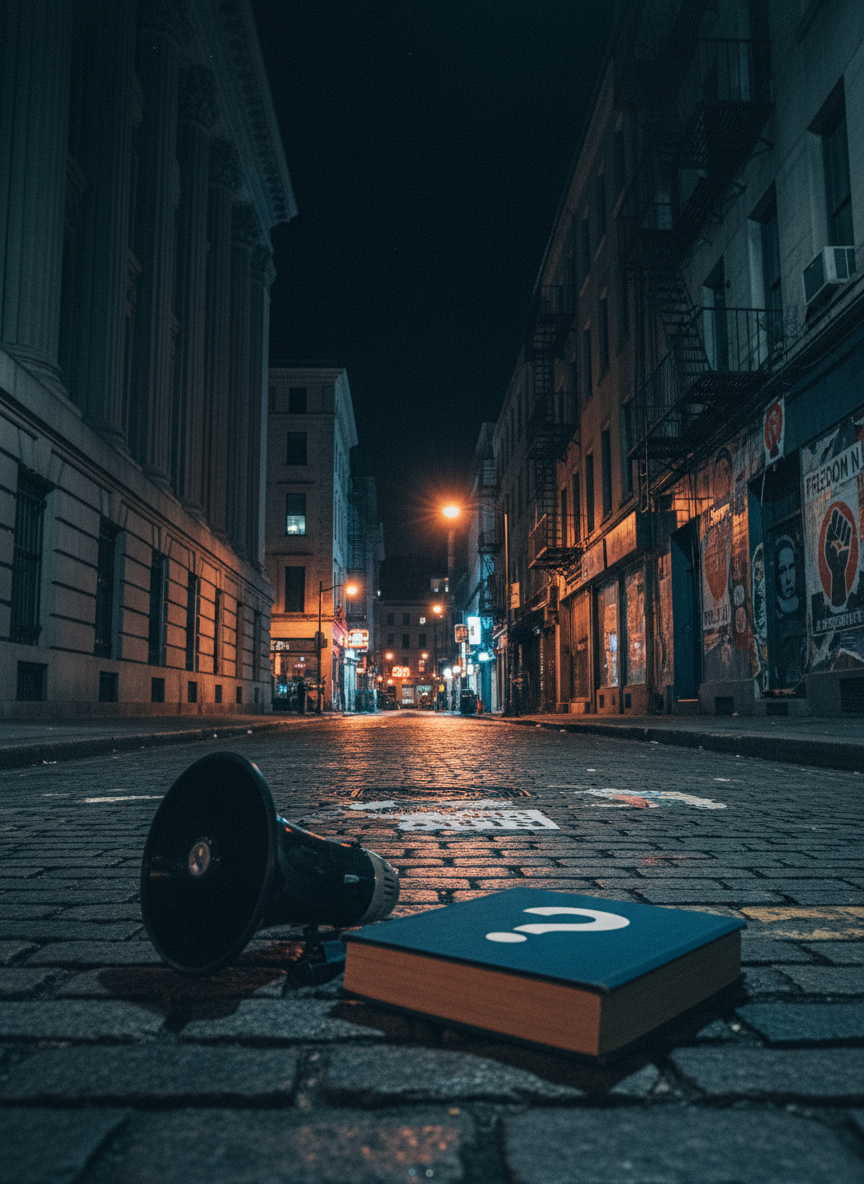
A narrow city street at night, photographed in analog-film style, with towering government buildings on one side and modest apartment facades on the other. Streetlights cast pools of amber light, revealing layers of political posters peeling from worn stone walls, overlapping slogans half-torn away so only fragments remain. In the foreground, a single overturned megaphone lies beside a thick book titled only with a bold question mark on its cloth cover. The pavement glistens slightly as if from a recent rain, reflecting distorted letters and symbols. Shot from a low angle with deep perspective and subtle film grain, the mood is tense, questioning, and quietly rebellious, hinting at power, resistance, and the fragility of public discourse.

Essays

Alle Analysen in einer geordneten Übersicht – sortierbar nach Datum, Relevanz oder Länge für vertiefende Lektüre und wiederkehrende Streifzüge.

Essay-Archiv

Über

Wie diese Essays lesen

Diese Texte sind keine schnellen Meinungen, sondern sorgfältig entwickelte Argumentationen. Sie laden ein, Widerspruch zu denken, Zusammenhänge zu prüfen und eigene Positionen im Spannungsfeld von Politik, Gesellschaft und Philosophie zu erkunden.
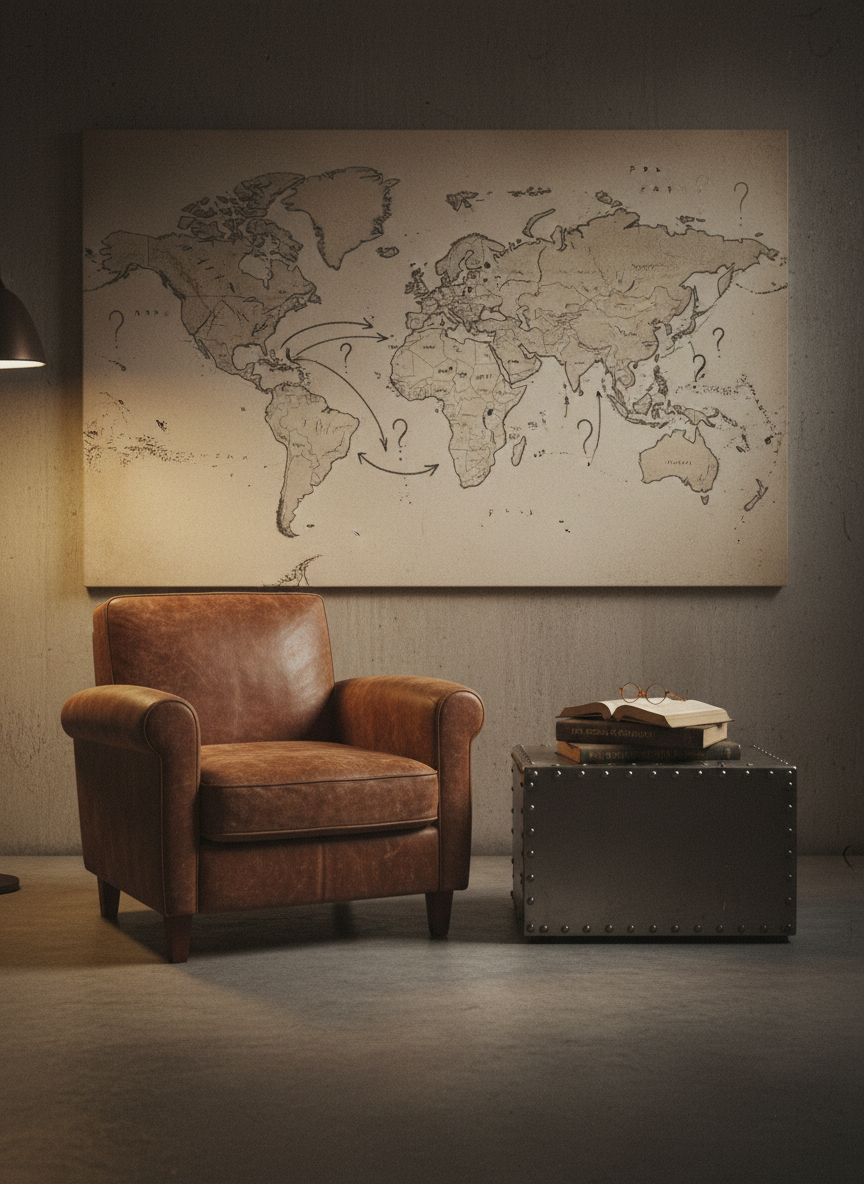
An old, slightly scuffed leather armchair sits empty in the middle of a minimalist room, facing a wall-sized, analog-style world map filled with hand-drawn arrows, circles, and question marks. On a low industrial metal side table beside the chair lie two open books on political theory and a pair of round spectacles resting on top. Warm, low-key tungsten lighting from an unseen floor lamp creates a pool of light around the chair, while the corners of the room fade into soft grainy shadows. Captured from a slightly elevated angle with analog-film realism, the composition uses the rule of thirds to emphasize the empty seat, evoking critical distance, skepticism about power, and space for uncomfortable, independent reflection.